
Last verified: October 20, 2026. Museum prices and hours came from the official checkout and the ministry’s own page, and boat fares aren’t published anywhere. I re-check this page monthly.
Every hotel desk in Aswan sells “the Nubian village” as an afternoon. You get a boat, painted houses, henna and tea. What most visitors never learn is that the Nubian village in Aswan they’re taken to isn’t one the High Dam drowned. Those villages are under Lake Nasser, and most of their families now live nearly two hours’ drive north.
Disclosure: Some links in this guide may earn us a commission, at no extra cost to you. It never changes what we recommend.
Below, I cover who the Nubians are, the three kinds of village you can visit with dated costs, and how to be a guest there rather than an audience. For the wider rules on faith and manners, see my guide to Egyptian culture.
Key Takeaways
- See the Nubia Museum first. It costs 400 EGP for a foreign adult on the official checkout (October 20, 2026).
- For most people, take the public ferry to Elephantine. Its two villages are lived in, and the crossing costs a few pounds.
- Gharb Soheil is the tour village. It’s colourful and commercial, and a UN Tourism award winner.
- Ask before every photo, buy direct, and skip the crocodile.
Table of Contents
Who Are the Nubians, and Why Do They Live Around Aswan?
Nubians are the people of the Nile valley from Aswan south into northern Sudan, with their own languages and building style. Egypt’s part of Nubia ran south from Aswan until dams flooded it. The first Aswan dam opened in 1902 and was raised in 1912 and 1933, and each time villages upstream were rebuilt higher or moved (Dotawo).
The High Dam finished the job. When its reservoir filled in the 1960s, it covered what Nubians call Old Nubia. Roughly 70,000 Egyptian Nubians were moved between October 1963 and June 1964 (New Lines Magazine). Estimates vary widely: Al-Monitor puts the High Dam move at about 55,000 people (Al-Monitor, February 2020). The same water forced UNESCO’s campaign to save Abu Simbel, which is why the temples that were moved for the same water now sit inside an artificial hill.
Most went to new villages on reclaimed land near Kom Ombo, called Nasr al-Nuba, or New Nubia. Residents later described the government houses as 100 square metre “cement cells” (Dotawo). Nubians call the move Tahjir (also written Tahgeer), displacement. My Aswan guide tells that part of the story in more detail.
Nobody counts Nubians officially today. Rights groups estimate 3 to 5 million, and my culture guide explains where that figure comes from. Two Nubian languages are spoken in Egypt, Kenzi around the First Cataract and Nobiin further south. A 2017 study rates both as endangered (International Journal of Intangible Heritage, 2017). Many younger Nubians grow up speaking Egyptian Arabic first (Egyptian Streets, April 2025).
Which Nubian Village in Aswan Should You Visit?
There are three kinds, and they’re different trips. Gharb Soheil is the tour village, and UN Tourism, which spells it Gharb Suhayl, named it one of 55 Best Tourism Villages in November 2024, from over 260 applications (UN Tourism). Elephantine’s two villages are where I’d send most people. Nasr al-Nuba, where the displaced families live, has no tourist set-up at all.
Gharb Soheil and Elephantine both sit downstream of the two Aswan dams. The villages the water took were upstream, in Old Nubia. So the colourful village you’re sold is a real Nubian village, but it isn’t the place the dam story happened. If you want that story, the Nubia Museum tells it best.
| Village | Where | How you get there | What it costs | What you see | Best for |
|---|---|---|---|---|---|
| Gharb Soheil | West bank, by the First Cataract | Motorboat or felucca from the Corniche | No entry ticket; the boat is the cost | Painted houses, shops, henna, tea, guesthouses, crocodile houses | A short, easy afternoon |
| Elephantine (Siou and Koti) | Island off the Corniche | Public ferry, a short crossing | 5 to 10 EGP ferry | Lived-in lanes, Animalia family museum, roof cafes | Most travellers |
| Nasr al-Nuba (New Nubia) | Near Kom Ombo, north of Aswan | By road, 1 h 47 min (69 km) | Car hire | The resettlement villages; no tourist services | Only with a Nubian host or guide |
Sources: UN Tourism for Gharb Soheil’s award; ferry fare from traveller reports; drive time from Google Maps, read October 20, 2026.
Gharb Soheil is easy and genuinely pretty. It’s also where the tour boats land, and some houses keep crocodiles for photos. My Aswan guide gives the honest read on the Gharb Soheil tour, and I won’t repeat it here. The award is real, and so is the commerce.
Elephantine is the one I’d choose for an afternoon. Siou and Koti are ordinary villages with no ticket booth. Animalia, a small museum run by a Nubian family in their own house, shows Nubian wildlife, photos of Nubia before the flood and fixed-price crafts (Lonely Planet). I found no published fee, so ask at the door.
Nasr al-Nuba isn’t a sight. It’s where most of the 1964 families were resettled, and it’s on the road to Kom Ombo temple. If you’re curious, ask a Nubian guesthouse host whether they can introduce you. Don’t turn up with a camera and no contact.
For more than an afternoon, a night in a Nubian guesthouse on Elephantine or across the river is the better trip, and my Aswan stay guide prices them.
What Does a Visit Cost, and How Do You Get There?
The museum is the only fixed ticket. On October 20, 2026, the official checkout charged 400 EGP for a foreign adult and 200 for a student at the Nubia Museum (egymonuments.com). The Elephantine ferry costs a few pounds. The cost that varies is the boat to Gharb Soheil, because it has no published fare.
| Item | Price | Source |
|---|---|---|
| Nubia Museum | 400 EGP foreign adult, 200 student | Official checkout, read October 20, 2026 |
| Kalabsha Temple, a Nubian temple moved to a site beside the High Dam | 200 EGP foreign adult, 100 student | Official checkout, read October 20, 2026 |
| Public ferry to Elephantine | 5 to 10 EGP | Traveller reports |
| Boat to Gharb Soheil and back | No published fare; my Aswan guide’s August estimate was about 350 EGP | Agree it before you board |
| Animalia, Elephantine | No published fee | Ask at the door |
| Walking in Gharb Soheil or Elephantine | Free | No ticket booth |
So the cheapest good afternoon is the museum plus the ferry, about 410 EGP. Add the Gharb Soheil boat at that August estimate and it’s about 760. Kalabsha is worth adding if you’re already out at the High Dam, though it sits on its own island and needs a short boat ride too. The boat tour still makes sense if you’re short on time or want the felucca ride for its own sake.
Before you step aboard, agree the price, how long the boatman waits, and that you pay on the way back. Bring small notes. If you’re unsure what to add for good service, my tipping guide covers boatmen.
Why Go to the Nubia Museum First?
Because it explains what the tour won’t. The museum opened in 1997 as part of the rescue of Nubia’s monuments, and it won the Aga Khan Award for Architecture in 2001 (Egyptian Monuments). It’s open 9am to 5pm daily, with tickets sold until 4pm.
On Thursday and Friday it reopens from 6pm to 9pm, with tickets until 8pm. In an Aswan heatwave, that’s the time to go. In Ramadan, the hours are 9am to 3pm, with the last ticket at 2pm.
Start with the main hall and its diorama of Nubian traditions and crafts. Then walk the garden: part of a Fatimid cemetery, a cave with prehistoric rock art, and a reconstructed Nubian house. Allow one and a half to two hours.
What Should You Know About Nubian Homes, Food and Music?
The domed houses and painted walls are the part you’ll notice first, and the painting was traditionally women’s work. A study of Nubian bridal rooms in the journal Dotawo describes women decorating walls inside and out, and notes the bridal-room custom ended after the move north (Dotawo). Painted walls are still the first thing you’ll notice around Aswan’s Nubian villages.
Houses. The roofs are mud-brick vaults built without a wooden frame underneath. Each course of bricks leans on the one before. The Egyptian architect Hassan Fathy first saw Nubian building on a trip to Aswan in 1941, and he made the vault famous (ArchDaily, July 2025). You’ll spot vaults on newer buildings around Aswan too.
Food. If you’re invited to eat, expect home cooking. A 2016 Arab Weekly report described kabed, a corn-flour bread baked on a mud hearth, and village gardens of okra, beans, peas and spinach. It also found the old dishes cooked less often than before (Peaceful Societies, UNC Greensboro, summarising The Arab Weekly, April 2016). Accept the first glass of tea. If a meal is being sold, ask the price before you sit down. For the dishes you’ll meet everywhere else, see my Egyptian food guide.
Music. Traditional Nubian music is built on voice, hand-clapping and the tar, a frame drum. Its best-known voice, Hamza El Din, carried it to the world on the oud. He was born in 1929 in Toshka, a village now under the lake. His 1971 album Escalay is about the waterwheel of his childhood, in a land already under water (Egyptian Streets, November 2021). Listen to it on the boat.
How Do You Visit Without Being an Audience?
Stay longer, buy direct, and ask before every photo. My culture guide’s test applies here more than anywhere: are you a guest or an audience? An hour on a boat schedule makes you an audience. A slow afternoon or a night in a family house makes you a guest. The UK government’s travel advice also says Egyptian law requires a citizen’s written permission before you photograph them (FCDO, updated August 2026).
Here are my five rules, with the reason for each.
- Stay a night, or at least a slow afternoon. Time is what turns a tour into a visit. When I priced rooms on October 7, 2026, a typical Elephantine guesthouse was $43 a night for two, only $5 more than a room on the East Bank.
- Buy from the maker. Ask who made the basket or the beads, and buy there. Money paid at the house stays in the village.
- Ask before photos, and accept no. The FCDO says photographing children is prohibited, so don’t.
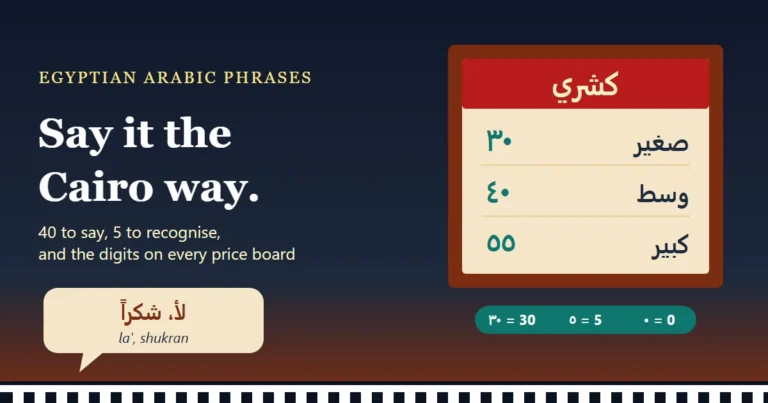
- Dress as you would in any village. Cover shoulders and knees. The FCDO advises modest dress “especially in rural areas”. If your host takes their shoes off inside, do the same. A few words of Arabic help too, and forty useful Egyptian Arabic phrases cover most of what a visit needs.
- Skip the crocodile photo. AFP reported in 2020 that Nubian families keep crocodiles as an old sign of blessing and, now, as a paid photo stop (Asharq Al-Awsat, March 2020). Some are kept in small tanks, and my Aswan guide describes the taped snouts. You can decline politely without judging your hosts.
Is There Still a Lost Nubia to Go Back To?
The land is still there, under and around Lake Nasser. Egypt’s 2014 constitution, in Article 236, told the state to bring Nubians back to their original areas and develop them within ten years of the constitution taking effect (Constitute Project, English text). Parliament has debated laws since, without settling the return (Mada Masr, June 2018). That period ended in January 2024. In April 2025, Egyptian Streets described implementation as inconsistent, with many Nubian lands declared military zones (Egyptian Streets).
Some steps have been taken. In January 2020, the government held a ceremony to compensate thousands of Nubian families for lost land (Al-Monitor, February 2020). Rights groups argue that compensation is no substitute for the right to return (Committee for Justice).
For many Nubian families, the return is still an open question. And if you take the Lake Nasser cruise, the shore you’re looking at is the land in question.
Nubian Village in Aswan: FAQs
Is the Nubian village in Aswan worth visiting?
Yes, if you choose the right one. For most people, that’s Elephantine, a 5 to 10 EGP public ferry from the Corniche, where Siou and Koti are lived-in villages. Do the Nubia Museum first, at 400 EGP on the official checkout on October 20, 2026. A night in a guesthouse is better still.
Is the Nubian village in Aswan a tourist trap?
Gharb Soheil is commercial. The boats land there, the shops line the path and some houses keep crocodiles for photos. It’s also a real village, and UN Tourism named it one of 55 Best Tourism Villages in 2024. Go with a fixed boat price and skip the crocodile.
How do you get to the Nubian village from Aswan?
Gharb Soheil is reached by motorboat or felucca from the Corniche. There’s no published fare, so agree the price, the waiting time and the return before you board. Elephantine’s villages are a 5 to 10 EGP public ferry, a short crossing from the Corniche.
How much is the Nubian Museum in Aswan?
The Nubia Museum cost 400 EGP for a foreign adult and 200 for a student on the official checkout on October 20, 2026. It’s open daily 9am to 5pm, with tickets until 4pm. On Thursday and Friday it reopens 6pm to 9pm. Allow one and a half to two hours.
Can you visit a Nubian village without a tour?
Yes. Elephantine needs no tour at all: take the public ferry and walk. Gharb Soheil needs only a boat, which you can hire at the Corniche. For Nasr al-Nuba, near Kom Ombo and 1 hour 47 minutes by road, go only with a Nubian host or guide.
Who are the Nubians?
Nubians are the people of the Nile valley from Aswan into northern Sudan, with their own languages (in Egypt, Kenzi and Nobiin). In 1963 and 1964, ahead of the High Dam’s rising reservoir, roughly 70,000 Egyptian Nubians were moved north, though estimates vary widely. Rights groups estimate 3 to 5 million Nubians in Egypt today.
The Bottom Line
A Nubian village in Aswan is worth your afternoon, as long as you choose the right one and go as a guest.
- See the Nubia Museum first. It’s 400 EGP, and it explains everything the boat tour leaves out.
- Take the public ferry to Elephantine for lived-in villages at almost no cost.
- Stay a night in a Nubian guesthouse if your trip allows it.
- Ask before photos, buy from the maker, and skip the crocodile.
For the rest of your day, my Aswan guide covers Philae and the boats. For a bed in a Nubian house, see where to stay in Aswan.