
Last verified: October 12, 2026. Mosque hours and ticket prices come from the official monument pages and the ministry’s price list, and the 2027 holiday dates are projections until the moon is sighted. I re-check this page monthly and update the date each time.
Egypt’s population clock passed 109.5 million people on September 19, 2026, and nearly all of them will never meet a tourist. The manners that matter here are the ones that work in an ordinary Cairo street, not the ones written for a resort. That’s the gap most etiquette guides fall into, and the one this Egyptian culture guide is built to close.
Disclosure: Some links in this guide may earn us a commission, at no extra cost to you. It never changes what we recommend.
Most etiquette guides hand you one list, often written years ago, that puts “don’t point” next to “don’t photograph the Suez Canal” as if they carried the same weight. One is a courtesy. The other is a crime under Egyptian law.
So this page does three jobs. It shows what daily life looks like, separates what’s rude from what’s illegal, and tells you where each rule applies. A Red Sea resort, a Cairo street and a mosque run on three different settings. If you’re planning a first trip, start with the fifteen things I wish someone had told me and the practical side of planning a first trip, then come back here for the why.
Key Takeaways
- Egypt’s rules are layered by place. Hair covered only inside mosques, shoulders to knees in towns, ordinary swimwear at the Red Sea.
- Holding hands is fine. Kissing in public is not. Drinking is legal only in licensed venues and private homes, and photographing children is prohibited.
- Ramadan 2027 runs from about February 8 or 9 to March 9 or 10. Sites and hotels stay open; restaurants and hours shift.
- About 109.5 million people, overwhelmingly Muslim, with a Christian minority that official surveys put near 5% and the church puts near 10%.
Table of Contents
What Is Egyptian Culture Like Today?
Family comes before the individual, reputation sits near the centre of daily decisions, and hospitality is a duty you can’t fully refuse. Egypt is a country of about 109.5 million people (CAPMAS via Egypt Today, September 2026), and most of them live outside the big cities. In its July 2026 population report, the state statistics agency put 57.3% of Egyptians in rural areas, with Cairo governorate alone holding 10.5 million people (CAPMAS via Ahram Online, July 2026).
The faith picture is simpler at the top than at the edges. Pew’s 2011 analysis put Muslims at about 95% of Egyptians in 2010, almost all Sunni. How many Christians there are is a live argument. The best census and survey data pointed to roughly 5%, while media reports citing the Coptic Orthodox Church often say 10% or more (Pew Research Center, February 2011).
The number matters to a traveller because the Christian part of the story is the one most guides skip. Coptic Christmas on January 7 has been a national holiday since a presidential decree took effect in 2003 (AP via the Lawrence Journal-World, January 2003). Church bells share the skyline with minarets in Old Cairo, and the spring festival the whole country celebrates sits on the Coptic calendar. Egypt runs on three calendars at once, and I’ll come back to that.
Egyptian Arabic is the glue. Almost everyone speaks it, and because Cairo made the Arab world’s films for a century, most Arabic speakers from Morocco to Iraq understand it. The south speaks Sa’idi Arabic, and smaller communities keep their own languages alive: Nubian around Aswan and Siwi in the oasis of Siwa, and Coptic survives in church liturgy. I’ll get to the primer that makes the temples make sense and Nubian culture around Aswan further down, because both deserve their own page.
How Does Faith Shape an Ordinary Day?
Five daily prayers set the soundscape, and Friday noon prayer sets the week. The weekend is Friday and Saturday, banks and government offices take both days, and many shops treat Saturday as a working day. Faith isn’t fading with the young, either. In its March 2023 report on Wave VII, Arab Barometer found that the share of Egyptians aged 18 to 29 calling themselves not religious fell from 18% in the 2018 to 2019 wave to about 6% in 2021 to 2022 (Arab Barometer, March 2023). That is a 12-point drop.
The adhan, the call to prayer, carries from every minaret five times a day. Faith here is ordinary and unshowy: a visitor isn’t expected to do anything during it, and most Egyptians carry on with what they were doing. Friday’s noon prayer is the one to plan around. Shops near a mosque shut for an hour or so, taxis thin out, and the streets go quiet before filling again.
Religious phrases run through everyday speech. “Inshallah” (God willing) answers almost any question about the future, and it means yes, maybe and probably not, depending on the tone. “Alhamdulillah” (praise God) answers “how are you”. “Ma’alesh” (never mind) smooths over the small failures of a day. Egyptian Christians use most of the same phrases.
| Weekday | Friday | Saturday | Ramadan | |
|---|---|---|---|---|
| Government offices | Open | Closed | Closed | Shorter days |
| Banks | Open | Closed | Closed | Shorter days |
| Shops and malls | Open, often late | Open, pause around noon prayer | Open | Quiet by day, busy late |
| Museums and sites | 8 or 9 to 4 or 5 | Same | Same | Cairo’s close earlier; Upper Egypt’s don’t |
| Restaurants | Open | Open | Open | Many closed until sunset |
The museum hours come from the ministry’s price list and the official monument pages, read on October 12, 2026 (Egyptian Ministry of Tourism and Antiquities, dated November 5, 2024). The museums row’s Ramadan entry comes from the official checkout’s Ramadan hours, read on October 18, 2026 (egymonuments.com). Last entry comes an hour early at the Egyptian Museum and two hours early at the Coptic Museum, which closes at 3pm instead of 5pm (Egyptian Monuments). Giza and Saqqara lose half an hour, and the temples from Luxor to Abu Simbel keep their winter hours.
The month itself has its own page: what actually changes during Ramadan has the full picture, and my guide to Coptic Cairo and the desert monasteries covers the Christian side of the calendar.
One legal line is worth knowing on the faith side. Trying to convert anyone to Christianity or any other religion is illegal in Egypt, according to the UK Foreign, Commonwealth and Development Office’s travel advice (FCDO, read October 12, 2026). Conversation about faith is welcome, and most Egyptians enjoy it.
The Dress Code Has Three Tiers
Hair covered only inside mosques. Shoulders to knees, loose over tight, in towns and at ancient sites. Ordinary swimwear at Red Sea resorts, pools and cruise decks. The FCDO’s entire dress guidance is one line: dress modestly, especially in rural areas, mosques and souqs (FCDO, read October 12, 2026). I’ve kept this section short because the season-by-season packing list already draws the three tiers out in full.
What do Egyptians consider appropriate? In a 2014 Pew summary of a University of Michigan survey, 52% of Egyptian respondents picked a white hijab covering hair and ears as the most appropriate public dress for women (Pew Research Center, January 2014). In the same survey, 14% agreed that women should choose their own clothing. That survey is over a decade old, and Cairo’s streets today show more variety than it suggests. A visitor isn’t expected to cover her hair outside a mosque.
For men the rule is simpler. Long trousers in town, because shorts read as beachwear or childhood. A shirt with sleeves. The same outfit works at the pyramids, and in July heat loose long cotton is cooler than shorts anyway.
My own habit is one outfit for a Luxor site day and the same outfit for a Zamalek evening: loose linen trousers, a long-sleeved shirt, closed shoes. A scarf lives in the daypack and comes out only at a mosque door. The one place I’ve seen visitors get it wrong is at a Red Sea resort, packed as if for a mosque visit. Tier three means what it says, and bikinis are normal there.
Two more things. Dressing to blend in reduces attention, and my solo female travel guide is honest about what that does and doesn’t do. And the stakes rise during Ramadan, when the FCDO notes that clothing outside local norms causes more offence than usual.
Can Tourists Visit Mosques and Churches?
Yes. Nearly all of Cairo’s historic mosques and Coptic churches admit non-Muslims outside prayer times, and entry costs from nothing to 550 EGP (about $11). Shoes come off in the prayer hall, women cover their hair, everyone covers shoulders and knees, voices stay low, and nobody photographs people praying. A shoe minder at the door expects 5 to 10 EGP, as my tipping guide explains.
This is the part of this Egyptian culture guide most readers came for: which building charges what, and which ones are museums rather than working mosques. I read every official page and the ministry’s price list on October 12, 2026, and this is what they say. Where the official sources are silent, I say so rather than guess.
| Building | What it is | Non-Muslims | Hours (official) | Foreign ticket | Notes |
|---|---|---|---|---|---|
| Al-Azhar Mosque | Working mosque and university, since 970 | Yes, outside prayer | Not published; unofficial listings say 9 to 4 or 5, shut for Friday noon prayer | Not on the ministry list; unofficial listings report free entry or a small fee | Bring a scarf; a loaned cover-up is not guaranteed |
| Sultan Hassan and Al-Rifa’i | Ticketed monuments, facing each other | Yes | 9am to 5pm daily | 220 EGP adult, 110 student, one ticket for both | Shoes off inside; tombs of King Farouk and the last Shah in Al-Rifa’i |
| Muhammad Ali Mosque | Ottoman mosque inside the Citadel | Yes | Mosque 8am to 4pm; Citadel 8am to 5pm | Included in the 550 EGP Citadel ticket (275 student) | The one most tours use; views over the city |
| Ibn Tulun Mosque | Cairo’s oldest intact mosque, 879 | Yes | 9am to 4pm on the ministry list | No charge on the ministry list | Climb the spiral minaret; the Gayer-Anderson house is next door |
| Amr ibn al-As Mosque | Working mosque, the first in Africa, 642 | Yes, outside prayer | Not published | No charge on the ministry list | Rebuilt many times; near the Coptic Cairo metro stop |
| The Hanging Church | Coptic Orthodox, over a Roman gate | Yes | 9am to 4pm on the ministry list | No charge on the ministry list | Shoes stay on; modest dress applies |
| Abu Serga | Coptic church on the Holy Family trail | Yes | 9am to 4pm on the ministry list | No charge | The crypt is the draw |
| Ben Ezra Synagogue | Historic synagogue, Coptic Cairo | Yes | 9am to 4pm on the ministry list | No charge | No active congregation; it’s a monument |
| Coptic Museum | State museum, Coptic Cairo | Yes | 9am to 5pm; 9am to 3pm in Ramadan | 280 EGP adult, 140 student | Last ticket an hour before closing |
Sources: Al-Rifa’i Mosque, Muhammad Ali Mosque, Cairo Citadel and the Coptic Museum on the official monuments site, plus the ministry’s ticket price list dated November 5, 2024, all read October 12, 2026. That list is still the latest the ministry publishes, and the monument pages matched it on every price I checked. Egypt revises entry fees almost every year, so treat the numbers as a snapshot.
The difference between a working mosque and a ticketed monument matters more than the fee. At Al-Azhar and Amr ibn al-As, you’re a guest in someone’s place of worship, so you work around the five prayers. At Sultan Hassan or the Citadel, you’re a visitor to a monument that happens to be a mosque, and the hours are the hours.
The shrine mosques are the exception. Al-Hussein beside the Khan, Sayyida Zeinab and Sayyida Nafisa are places of pilgrimage as much as prayer, and their interiors may be closed to non-Muslims. If the man at the door says no, that’s the answer, and a polite shukran costs nothing.
Coptic churches follow the same modesty rules without the shoe rule. Sunday morning and Friday morning are liturgy times at the Hanging Church, so go in the afternoon unless you want to stand quietly at the back. All of this sits a short walk from the Khan el-Khalili bazaar in one direction and the Mar Girgis metro stop in the other, and my Cairo guide has the routes.
How Do Egyptians Greet, Talk and Say No?
A handshake with the right hand, warmer and longer than a Western one, and a hand on the heart as the polite way to decline contact across genders. Titles carry weight. English is thinner than visitors expect outside hotels and tour circuits. In the 2025 EF English Proficiency Index, Egypt ranked 89th with a score of 458 against a global average of 488, which EF classes as low proficiency (EF Education First, 2025).
That number hides a split. The same EF fact sheet scores the city of Alexandria at 480 and Cairo at 478, while Luxor sits at 419 and Aswan at 413. In other words, English carries you through the capital and thins out sharply where the temples are. A guide earns his fee in Upper Egypt for reasons beyond Egyptology, and so does learning a few Egyptian Arabic phrases before you head south.
Conversation has a shape. It opens with family and health, and only then gets to business. Egyptians address people by title plus first name: Doctor Ahmed, Engineer Sara, Ustaz for a teacher or anyone respectable in a shirt. Hagg is for an older man, strictly one who has made the pilgrimage, in practice any older man. Visitors are forgiven for getting it wrong. People warm to you for trying.
Then comes the matter of no. A flat refusal sounds harsh in Egyptian Arabic, so people soften it, delay it, or say “inshallah” and mean no. The same applies in reverse. When you’re offered tea, the first “no thank you” is read as politeness, and the offer comes again. Accept the third time, or accept the first and save everyone the dance.
A few body-language rules travel well. The right hand gives, takes and eats. Pointing at a person with a finger is rude, so gesture with an open hand. Soles of the feet pointed at someone are an insult, which matters when you sit cross-legged on a felucca. Same-gender friends touch, link arms and kiss cheeks; opposite-gender strangers mostly don’t.
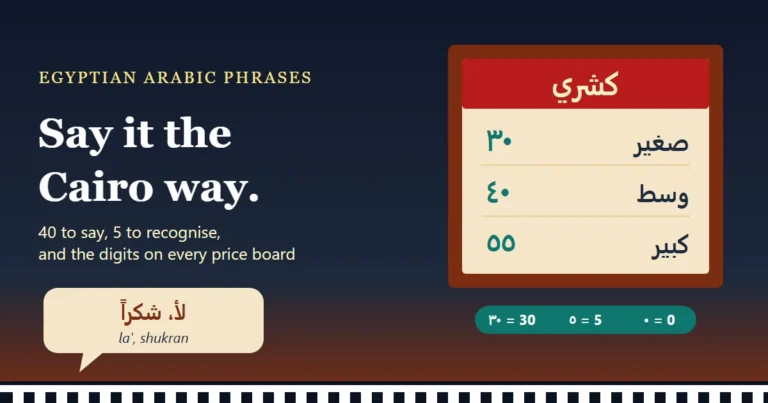
Haggling is a conversation. The first price at the Khan is an opening line, a counter at half is the reply, and the whole thing is supposed to be enjoyable. When it stops being either, walk away, and read how touts work and how to handle them before you go. Three phrases carry you a long way: salaam alaikum (hello), shukran (thank you), la shukran (no thank you). The 40 phrases that actually get used has the rest.
What Are the Rules Around Food, Tea and Alcohol?
Eat with the right hand, accept at least a little of what’s offered, and expect tea to open almost every interaction, including a visit to a shop. Alcohol is legal but confined to licensed restaurants, bars, hotels, private homes and some resorts; drinking anywhere else is illegal and can lead to arrest (FCDO, read October 12, 2026). Egyptians have been barred from being served alcohol during Ramadan for more than four decades, while service to foreigners continues.
Tea first, because it explains everything else. Shai is black, sweet, served in a glass, and offered by carpet sellers, guesthouse owners, the man whose felucca you’re pricing and the family whose photo you took. It’s hospitality, and it comes with the sale rather than instead of it. The ahwa, the traditional café, is where men sit over tea, coffee and shisha for hours, and visitors of either gender are welcome at the famous ones like El Fishawy by the Khan.
The everyday plate is cheap, filling and mostly vegetarian by accident. Koshary (rice, lentils, pasta and fried onion under tomato sauce), ful (slow-cooked fava beans) and ta’ameya (Egypt’s green falafel) feed the country for a couple of dollars a bowl. Feteer, a layered pastry, is the treat. The 20 dishes and where to eat them take it from here, and my Khan el-Khalili guide covers the cafés around the bazaar.
Invited to a home? Bring something small and sweet, follow your host on shoes, praise the food, and expect to be fed again when you say you’re full. An empty plate signals a refill, so leave a little when you’ve had enough. Tap water is a separate question, answered in my first-timer’s guide.
Now alcohol, where custom and law part ways. Egypt brews its own beer (Stella and Sakara) and makes its own wine, and a licensed hotel bar in Cairo or a Red Sea resort serves both without fuss. The licence is what makes the difference. Drinking on the street, on a beach outside a resort or in a park is illegal, per the FCDO wording above. Supermarkets don’t stock alcohol; licensed shops such as Drinkies sell it for drinking at home.
Ramadan adds a layer that confuses visitors. Since a ministerial decision in July 2012, licensed venues may not serve alcohol to Egyptian citizens on four Islamic holidays as well as in Ramadan (Ahram Online, July 2012). Ahram Online noted at the time that the Ramadan ban itself had stood for more than 30 years. The rule was still in force in Ramadan 2026, when a State Council case against the ban and the closure of bars was postponed to June (Al-Manassa, February 2026). Hotels keep serving foreign guests, often on request rather than at the buffet.
A legal drinking age of 21 turns up on many travel pages. I couldn’t find a primary source for it, so I’m not printing it as fact. Licensed venues card rarely in my experience, and the licence rule does the real work.
Ramadan and the Big Holidays Change the Hours
Ramadan 2027 is projected to begin on February 8 or 9 and to end with Eid al-Fitr on about March 9 or 10 (timeanddate, read October 12, 2026). Dar al-Ifta, Egypt’s religious authority, announces the final dates after the moon sighting, and the cabinet sets the days off. Sites and hotels stay open. Eating, drinking or smoking in public in daylight is culturally insensitive, in the FCDO’s words, and the hours of the day flip.
What a visitor gains is considerable. Lanterns hang over every street, families spill onto the pavement for iftar at sunset, and a stranger will press dates into your hand when the iftar cannon marks sunset. Night markets run past midnight. If you’re invited to an iftar, go. What a visitor loses is just as concrete. Cairo’s museums take their last visitors an hour or two early, many restaurants outside hotels shut until sunset, and bars go quiet for Egyptians. Driving gets erratic in the hour before dusk, the FCDO notes.
For the month itself, my Ramadan travel guide handles it in detail, site by site, and my month-by-month guide weighs February 2027 against the alternatives. Here I want to make the bigger point, which is that Egypt keeps three calendars at once.
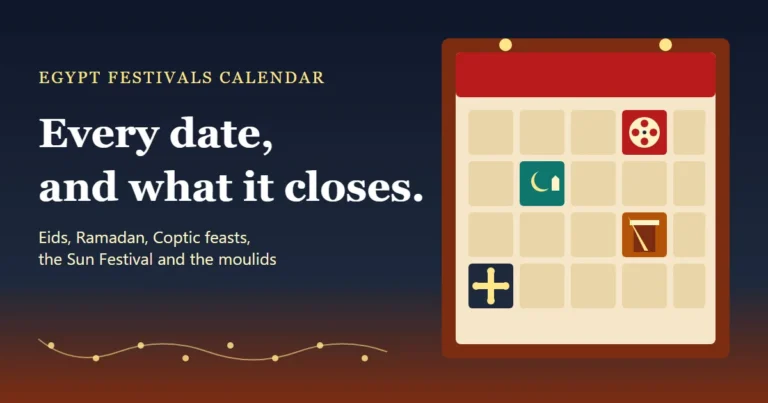
Business runs on the Gregorian calendar. Ramadan, the two Eids, the Islamic New Year and the Prophet’s birthday move with the Hijri calendar, about eleven days earlier each year. Coptic Christmas, Coptic Easter and Sham el-Nessim follow the Coptic calendar, which descends from the ancient Egyptian civil calendar and is kept by the Coptic Church from the Era of the Martyrs. Few travel guides print the three side by side for a given year. So here’s 2027.
A few notes on reading it. Eid al-Fitr’s days off are listed as March 9 to 11 and Eid al-Adha’s as May 16 to 18, with the public sector taking a fourth day (Office Holidays). Since 2020 the government has observed most mid-week holidays on a Thursday instead, so a date on the chart can shift by a day or two. And clocks go forward on the last Friday of April and back on the last Thursday of October under a 2023 law (Egypt Today, April 2026), which in 2027 means April 30 and October 28. I track what each 2027 date closes, including the likely Thursday for each holiday.
Sham el-Nessim deserves a line of its own. On the Monday after Coptic Easter, Muslims and Christians alike take the day off to picnic on salted fish, spring onions and coloured eggs. The name is Arabic for “smelling the breeze”, and Egyptians trace the festival to pharaonic times, long before either faith. Moulids, the local saints’ festivals, rarely make a printed calendar, and one is worth a detour if your guesthouse owner mentions it.
Baksheesh Is a Wage System, and Egypt Gives More Than Almost Anyone
Service pay in Egypt assumes baksheesh, and small notes given readily matter more than large ones given awkwardly. The same culture gives more than almost any other. In the Charities Aid Foundation’s World Giving Report 2025, Egyptians gave 2.45% of their income to charity, strangers and religious causes (Egypt Today reporting the CAF findings, July 2025). That put Egypt second only to Nigeria at 2.83%, and well above the global average of 1.04%.
That number comes from a survey of more than 50,000 people in 101 countries, and the 2025 edition changed its method to count informal giving between people, not just donations to registered charities. The new one captures what you’ll see: the tea you’re given, the lift you’re offered, the coins handed to a beggar outside the mosque. Zakat, the obligatory alms, and sadaqa, voluntary charity, make giving an ordinary part of the week.
For scale, Egypt’s private-sector minimum wage has been 7,000 EGP a month, about $140, since March 2025, with no change announced as of October 2026 (Egyptian Streets, February 2025). The public-sector floor rose to 8,000 EGP in July 2026 (Ahram Online, July 2026). A 10 EGP note to a shoe minder costs you about 20 cents and means something to him. Where you shouldn’t tip at all, and the exact amounts for a guide, a driver and housekeeping, are in my tipping guide with real amounts in EGP, so I won’t repeat them here.
Rude and Illegal Are Two Separate Lists
Rude: pointing, using the left hand, showing the soles of your feet, kissing in public, refusing all hospitality, loud criticism of religion or the president. Illegal, per the FCDO: photographing military property including the Suez Canal, photographing children, and flying or importing a drone without Ministry of Defence permission. Also illegal: trying to convert people, drinking outside licensed venues, and any drug offence (FCDO, read October 12, 2026). Holding hands is generally fine.
Any Egyptian culture guide should keep them apart, because the rude list costs you a frown and the illegal list can cost you a trip. The FCDO’s own numbers make the point. Unauthorised drone use or import “could lead to a prison sentence of up to 7 years” or a fine. Drug possession “can, even for small amounts, lead to life imprisonment.” Nothing on the rude list ends with a police report.
| Rude (custom) | Where it applies | Illegal (law) | Source |
|---|---|---|---|
| Pointing with a finger, eating with the left hand | Everywhere | Photographing military property, including the Suez Canal | FCDO |
| Soles of the feet toward someone | Everywhere | Photographing children; adults need written permission | FCDO |
| Kissing or cuddling in public | Towns and sites; relaxed at resorts | Importing or flying a drone without Ministry of Defence permission (up to 7 years) | FCDO |
| Shorts and bare shoulders in town | Towns, sites, villages | Drinking outside licensed venues | FCDO |
| Eating or smoking in the street in Ramadan daylight | Towns and villages | Any drug offence, including khat | FCDO |
| Refusing every cup of tea | Everywhere | Trying to convert someone to another religion | FCDO |
| Loud criticism of religion or the president | Everywhere | Sharing photos “damaging to Egypt’s image”; sexual content on social media | FCDO |
| Photographing people without asking | Everywhere | Carry ID: police may detain you without a passport or a copy | FCDO |
Photography is where the two lists tangle most. In 2023 the cabinet approved new rules so that personal, non-commercial photography in public places needs no permit and no fee, while photographing children stays restricted and adults must give written permission (Egyptian Ministry of Tourism and Antiquities, 2023). Ancient sites keep their own camera tickets and no-flash rules, which my Giza ticket guide covers for the plateau. Ask before photographing anyone, and expect a request for baksheesh when you do.
Same-sex couples should read the FCDO’s wording directly. Same-sex activity isn’t explicitly criminalised, but the authorities have prosecuted people under debauchery laws. Same-sex couples showing affection in public are likely to attract negative attention, and some travellers have been arrested over sexual content on social media. That is the advisory’s substance, and I’m not going to soften it or add advice beyond it.
Police check ID regularly, the FCDO notes, and may detain you if you can’t show a passport or a copy. A photo of the passport page and visa on my phone has been enough at every checkpoint where I’ve been stopped, but carry a paper copy too. At archaeological sites, don’t touch, climb on or pocket anything, and read “antique” at the Khan as a style rather than a date. My safety guide covers the rest.
How Do You Visit Egypt’s Other Cultures Respectfully?
Egypt is not one culture, which is why an Egyptian culture guide needs this section. Al-Monitor’s July 2025 report on Egypt’s endangered languages cites rights groups’ estimates of 3 to 5 million Nubians, whose language is spoken mostly by older people around Aswan (Al-Monitor, July 2025). The same report puts Siwa’s Amazigh (Berber) population at about 40,000, speaking Siwi with no written form. Coptic, the last form of ancient Egyptian, survives in church liturgy and, reportedly, in a handful of Upper Egyptian families. Sinai’s Bedouin tribes run the trails. In each place the test is the same: are you a guest or an audience?
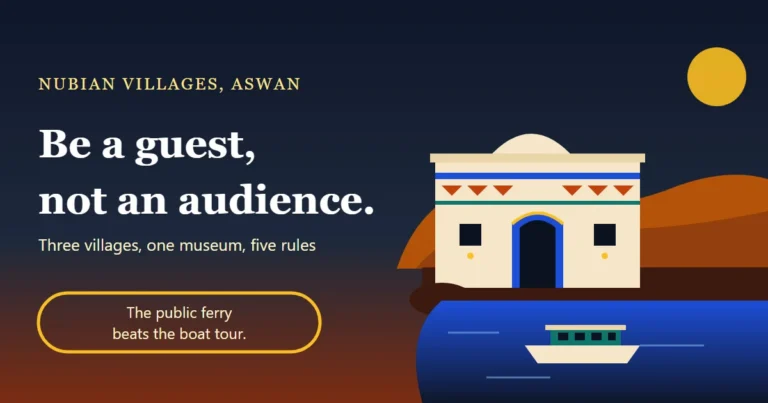
The Nubian village visit is the hardest case. A boat drops you at Gharb Soheil, a painted house serves tea, a crocodile sits in a tank, and twenty minutes later you’re back on the boat. It can be done well, and I’ve made the full argument for visiting the Nubian villages on its own page. The short version: stay a night rather than an hour, buy directly, and read my Aswan guide and where to stay in Aswan for the guesthouses that make that possible.
Siwa is more conservative than anywhere on the tourist circuit. Siwi women are rarely seen by visitors, and photographing anyone without asking causes genuine offence there. My Siwa guide has the practical side. In Sinai, the Bedouin guide on the Mount Sinai hike isn’t a formality, because the tribes hold the right to guide those trails, and the fee is how that right pays. The camps of Dahab run on the same relationships.
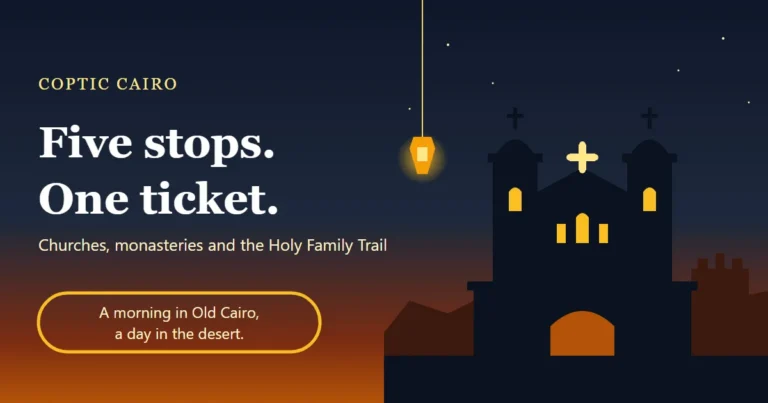
Coptic Egypt is the minority most visitors meet without noticing. A cross tattooed on the inside of a wrist, a church door in a Cairo side street, a Christian name on a guide’s badge. The Christian calendar, the monasteries in the desert and the Holy Family trail are a separate page: Old Cairo’s churches, the monasteries and the Holy Family trail.
How Does Ancient Egypt Connect to the Country You’ll Visit?
More than the temples suggest. Sham el-Nessim is a pharaonic spring festival still kept by Muslims and Christians alike, and Coptic is the last stage of the language on the temple walls. The Nile still decides where almost everyone lives: Cairo and Giza governorates alone hold 20.4 million people (CAPMAS via Egypt Today, September 2026). Egyptians are proud of the ancient past and tired of being reduced to it.
That pride is worth understanding before you open your mouth at the pyramids. The Grand Egyptian Museum is a national project as much as a museum, and the question “who really built the pyramids” lands the way it would if someone asked you who really built your parliament. Licensed guides at the sites have studied Egyptology, and most hold a degree, and they’ll talk about Khufu and about their cousin’s wedding in the same breath. That is the living connection.
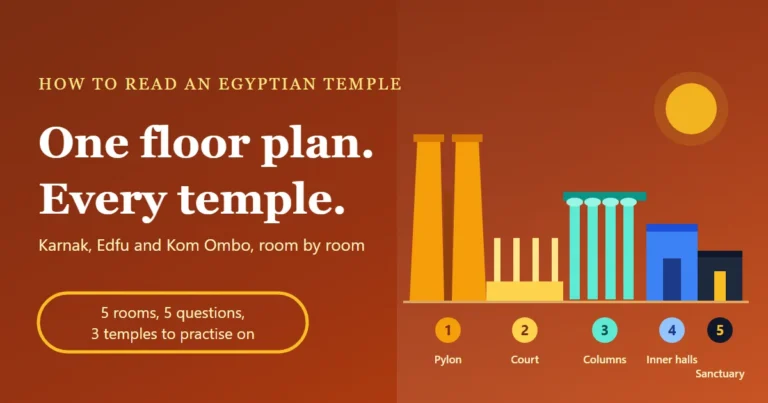
The context layer for every ticket page on this site lives in two posts. The primer that makes the temples make sense explains the dynasties, the gods and why the tombs are where they are. What a temple’s layout is telling you walks Karnak, Edfu and Kom Ombo room by room. Where the treasures and the royal mummies now sit is the museum comparison, and the Valley of the Kings guide sorts the tombs.
Egyptian Culture Guide FAQs
What should tourists not do in Egypt?
Don’t photograph military sites, the Suez Canal or children; don’t fly a drone; don’t drink outside licensed venues. Don’t kiss in public, don’t touch or climb on monuments, and don’t eat or smoke in the street in daylight during Ramadan. The FCDO’s advice lists the legal ones. Holding hands is fine.
Do women have to cover their hair in Egypt?
Only inside mosques. Elsewhere the code is shoulders to knees and loose over tight, and at Red Sea resorts, pools and cruise decks ordinary swimwear is normal. A 2014 Pew summary found 52% of Egyptians favoured a hijab as public dress for women, but visitors aren’t expected to follow it.
Can non-Muslims enter mosques in Egypt?
Yes, at nearly all historic mosques outside prayer times, though shrine mosques such as Al-Hussein may close their interiors to non-Muslims. Shoes come off, women cover their hair, and a shoe minder expects 5 to 10 EGP. Sultan Hassan and Al-Rifa’i charge 220 EGP, the Citadel 550 EGP, and Ibn Tulun shows no charge on the ministry list, as of October 12, 2026.
Is alcohol legal in Egypt?
Yes, in licensed restaurants, bars, hotels, private homes and some resorts. Drinking anywhere else is illegal and can lead to arrest, per the FCDO. Egyptian citizens can’t be served during Ramadan or on four other Islamic holidays under a ban that dates back decades and was extended in 2012, and it was still in force in 2026. Foreign guests are served.
When is Ramadan in 2027, and can you still travel?
About February 8 or 9 to March 9 or 10, 2027, pending the moon sighting. Sites and hotels stay open. Cairo’s museums take their last visitors an hour or two early, many restaurants outside hotels shut until sunset, and eating or smoking in public in daylight causes offence. Eid al-Fitr’s days off are listed as March 9 to 11.
Is it rude not to tip in Egypt?
For a service, yes, because baksheesh is part of pay in a country where the private-sector minimum wage is 7,000 EGP a month. Carry small notes. No tip is expected for directions freely given, at a fixed-price counter, or from someone whose help you declined in the first place.
The Bottom Line
Egypt’s rules are layered by place, and most offence comes from carrying one setting into another. If this Egyptian culture guide leaves you with one thing, make it that. Here are the twelve rules I’d hand a friend:
- Hair covered only in mosques. Shoulders to knees in town. Swimwear at the resort.
- Holding hands is fine. Kissing isn’t.
- Drink in licensed venues only. Never on the street.
- Never photograph soldiers, the Suez Canal or children. Adults need written permission.
- Leave the drone at home. Up to 7 years.
- Shoes off in the prayer hall, 5 to 10 EGP to the minder.
- Right hand gives, takes and eats.
- Accept the tea. The third offer, if you must.
- “Inshallah” can mean no. A flat no is harsh here.
- Ramadan daylight: don’t eat, drink or smoke in the street.
- Carry a passport copy. Police check ID.
- Tip small and often. It’s part of the wage.
Pick the question you’re least sure about and open its page. The 20 dishes and where to eat them are where most people start, and the fifteen things I wish someone had told me is where the practical trip begins.
I’m Marco Delgado, and I write every guide on Egypt Travel Vibe, this Egyptian culture guide included. I read every mosque price and museum hour on this page myself on October 12, 2026, from the official monuments site and the ministry’s price list where an official page exists. The law statements are the FCDO’s own wording, read the same day. Where a figure is contested, like the number of Christians in Egypt, I’ve printed the disagreement rather than picked a side. The 2027 holiday dates are projections until the moon is sighted, and I’ll update them when it is.